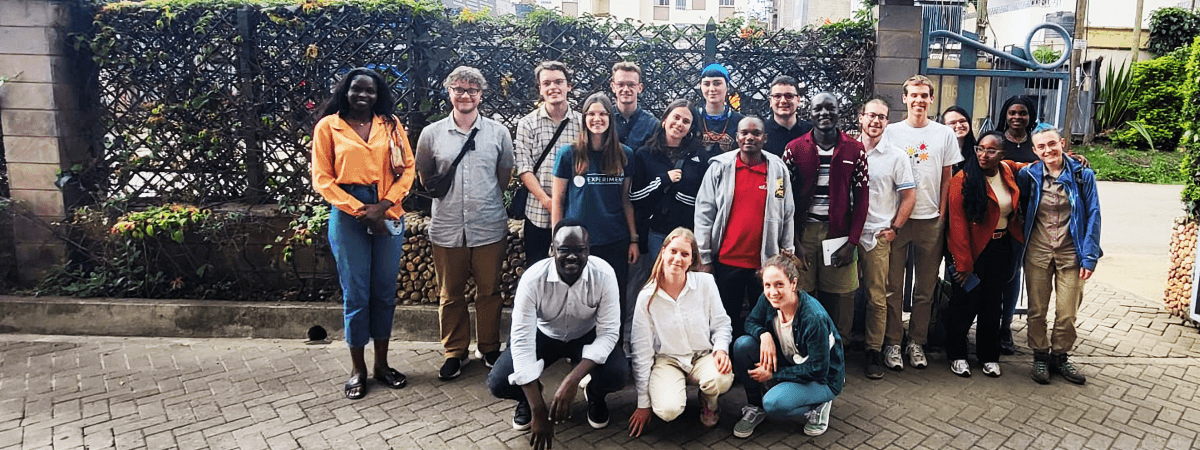
Mount Kenya University and University of Bayreuth Students Explore Nairobi as a Living Urban Laboratory
A conversation that began last year between Mount Kenya University (MKU) and Prof. Dr. Stefan Ouma, Chair of Economic Geography at the University of Bayreuth, has grown into a promising academic collaboration. The partnership gained momentum in April 2025 when Prof. Ouma visited MKU at the invitation of Dr. Gordon Ocholla, a researcher in Urban Political Ecology and lecturer in the Department of Social and Development Studies.
During the visit, he paid courtesy calls to Prof. Kennedy Mutundu, Dean of the School of Social Sciences, and Dr. Mercyline Kamande, Deputy Vice Chancellor for Academic and Research Affairs. Discussions focused on strengthening academic cooperation, student mobility, and joint learning initiatives between the two institutions.
The engagement culminated in a three-day academic urban excursion in Nairobi, bringing together students from both universities. Five students from MKU’s Nairobi and Thika campuses, drawn from the Department of Social and Development Studies, joined the visiting group for an immersive field experience. The excursion positioned Nairobi as a living laboratory for Global South urbanism, allowing students to explore how African cities challenge conventional urban theories while generating new knowledge on development, inequality, innovation, and sustainability.
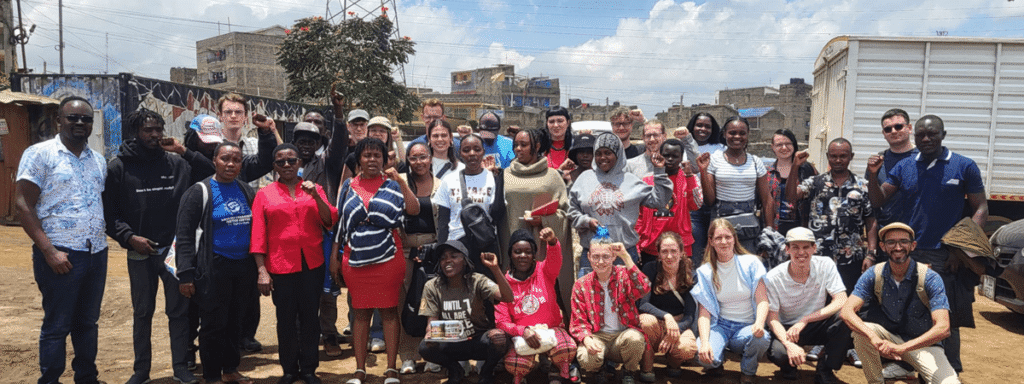
Inside the Nairobi Urban Excursion Bringing MKU and Bayreuth Students Together
Long viewed through externally imposed frameworks, African cities are increasingly recognized as sites of theory generation. Nairobi, with its dynamic mix of rapid urban growth, technological innovation, environmental initiatives, and social activism, provided an ideal setting for this experiential learning journey.
Through field visits, discussions, and reflection sessions, students examined how urban realities in Nairobi both complicate and enrich global debates on urban development.
Key Learning Sites Across the City
During the excursion, students visited several significant locations that reflect Nairobi’s diverse urban dynamics:
- Kayole Social Justice Center – Students engaged with grassroots activism and community-driven resistance against dominant narratives of city-making, learning how marginalized communities advocate for justice and accountability.
- Michuki Memorial Park – The visit highlighted efforts to restore the Nairobi River ecosystem and showcased environmental regeneration initiatives in urban spaces.
- Karura Forest – Here, students explored community-based natural resource governance and environmental conservation within a rapidly urbanizing city.
- Nairobi Expressway and Thika Superhighway – These infrastructure projects provided a real-world context for discussions on urban mobility, development planning, and socio-economic impacts of large-scale transport systems.
- Digital Innovation and Silicon Savannah – Students visited a technology hub and the headquarters of Ushahidi, a globally recognized civic technology platform born in Kenya. The visit introduced discussions on start-ups, artificial intelligence, digital inequality, and technological sovereignty emerging from the Global South.
Learning Through Dialogue and Reflection
The excursion encouraged participants to learn, unlearn, and reflect on their academic positionalities. By engaging with local communities, researchers, and innovators, students developed a deeper understanding of how knowledge about cities can be co-produced across cultures and disciplines.
When scholars from different parts of the world meet and critically engage with place-based realities, theory becomes dialogical rather than imposed. Such exchanges nurture intellectual humility, expand critical urban imagination, and inspire new collaborative research perspectives.
Strengthening Global Academic Collaboration
This initiative underscores the value of international academic partnerships in shaping globally aware scholars. The collaboration between Mount Kenya University and the University of Bayreuth demonstrates how cross-cultural learning experiences can enrich research, teaching, and global dialogue on urban futures.
Ultimately, the excursion reaffirmed Nairobi’s role as a vibrant, knowledge-producing city in the Global South, while highlighting the transformative potential of student mobility and collaborative scholarship.
This efforts are jointly contributing to the Sustainable development goals. Mount Kenya University (MKU) is the United Nations Academic Impact (UNAI) SDG 9 Hub Chair for Industry, Innovation, and Infrastructure for the 2025–2027 term.
Contributors: Daisy Florence Aoko and Victor Otieno, Bayreuth International Graduate School for African Studies (BIGSAS). Dr. Gordon Ocholla (PhD), Lecturer Mount Kenya University


