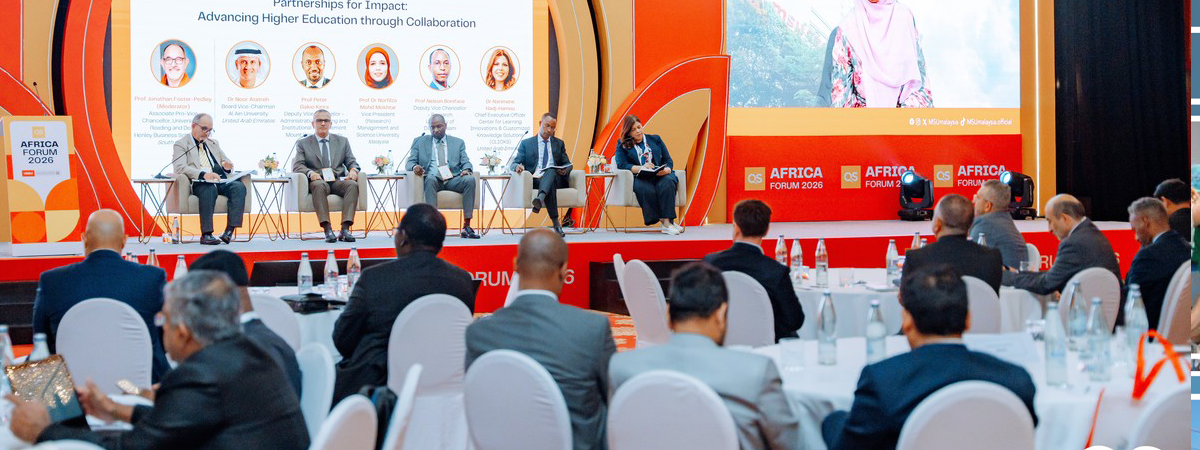
Mount Kenya University (MKU) participated in the QS Higher Ed Summit: Africa 2026, held in Addis Ababa, Ethiopia, from 9th to 12th July 2026. The summit brought together more than 500 delegates from Africa, India, and the Middle East, including university leaders, researchers, policymakers, and higher education stakeholders to discuss the future of higher education on the continent.
The MKU delegation was led by Prof. Peter Kirira, Deputy Vice-Chancellor, Administration, Planning and Institutional Advancement, who represented the University in several strategic engagements and served as a panelist during the high-level session “Partnerships for Impact: Advancing Higher Education Through Collaboration.”
Throughout the four-day summit, delegates explored emerging trends and solutions shaping higher education through a series of panel discussions and plenary sessions. Key topics included Africa 2030: Where Skills, Systems and Sustainable Futures Converge; The Future of African Higher Education; Skills at Scale: Micro-Credentials, Lifelong Learning and Employability; The AI Imperative and the Future of Higher Education; Leadership in Higher Education; Sustainable Higher Education; Building Institutional Capacity; Partnerships for Impact; and Global Mobility and its Benefits for Africa.
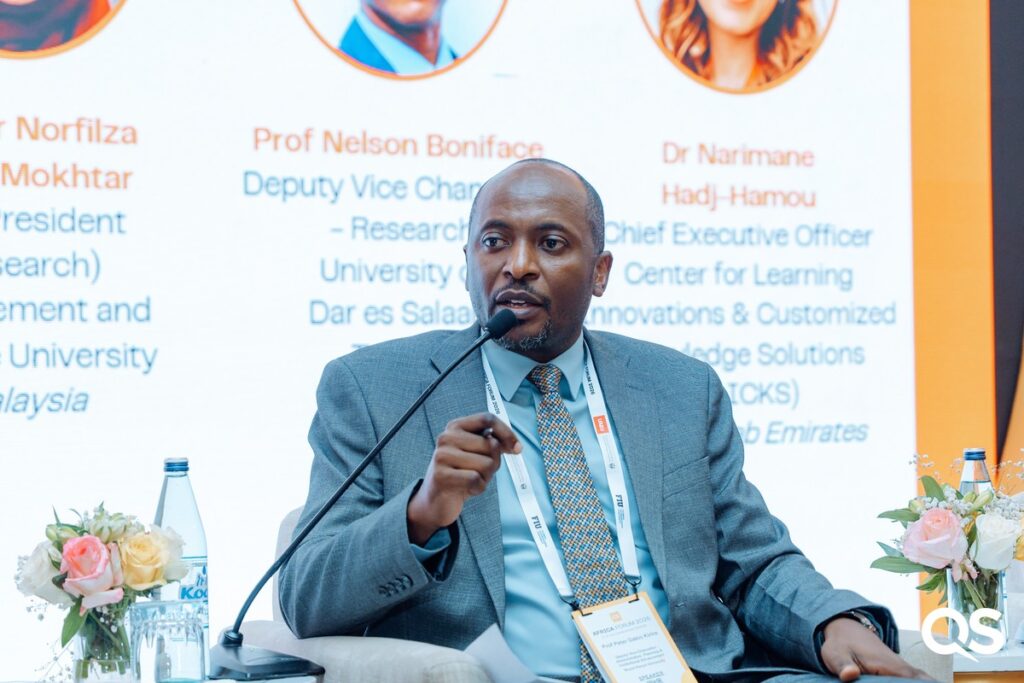
Photo Caption: Prof. Peter Kirira during the panel discussion
Mount Kenya University also featured prominently during discussions on Sustainable Higher Education: Aligning Growth with Climate and Social Impact. Participants expressed interest in the University’s regional expansion through Mount Kigali University and its community engagement initiatives, including the Imbuto Programme and the establishment of Early Childhood Development (ECD) classrooms, which were cited as examples of higher education creating measurable social impact beyond the classroom.
During the panel discussion on “Partnerships for Impact: Advancing Higher Education Through Collaboration,” Prof. Kirira shared how strategic partnerships have been the driving force behind MKU’s remarkable growth. The session was moderated by Prof. Jon Foster-Pedley of the University of Reading and Henley Business School Africa and featured distinguished panelists including Dr. Noor Atatreh (Al Ain University, UAE), Dr. Narimane Hadj-Hamou (CLICKS), Prof. Nelson Boniface (University of Dar es Salaam, Tanzania), and Prof. Norfilza Mohd Mokhtar (Management & Science University, Malaysia), who joined virtually.
Prof. Kirira explained that MKU’s success has been built on a deliberate culture of collaboration, beginning with mentorship from an established public university and evolving into strategic national and international academic partnerships. He noted that the University’s growth demonstrates that institutional excellence is driven not by age but by vision, innovation, and purposeful collaboration.
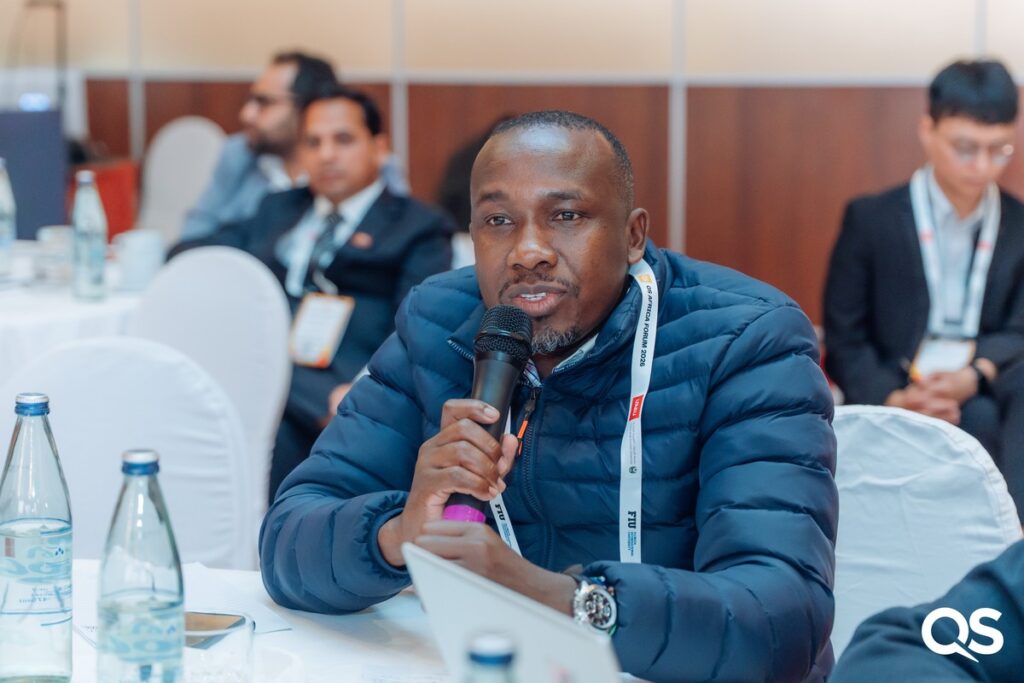
Photo Caption: Dr. Henry Yatich making a submission during the forum
As a flagship example, he highlighted MKU’s partnership with Osaka State University, Ehime University, the Japan International Cooperation Agency (JICA), Kenya’s Ministry of Education, and county governments, which resulted in the University securing a USD 5 million JICA grant. The funding led to the establishment of the Centre for Malaria Elimination, a state-of-the-art research facility that has supported postdoctoral researchers and postgraduate students, produced internationally recognized scientific publications, generated patentable innovations, and attracted additional research funding from organizations including the National Institutes of Health (NIH), the Bill & Melinda Gates Foundation, Erasmus+, GIZ, and KTN-UK.
Responding to a question on whether helping a partner become independent is the ultimate measure of a successful partnership, Prof. Kirira cited the evolution of Mount Kigali University into an independent university in Rwanda as a testament to MKU’s partnership philosophy. He observed that successful collaborations should create independence rather than dependency and emphasized that enduring partnerships are built on shared values, mutual trust, accountability, and sustained investment in relationships.
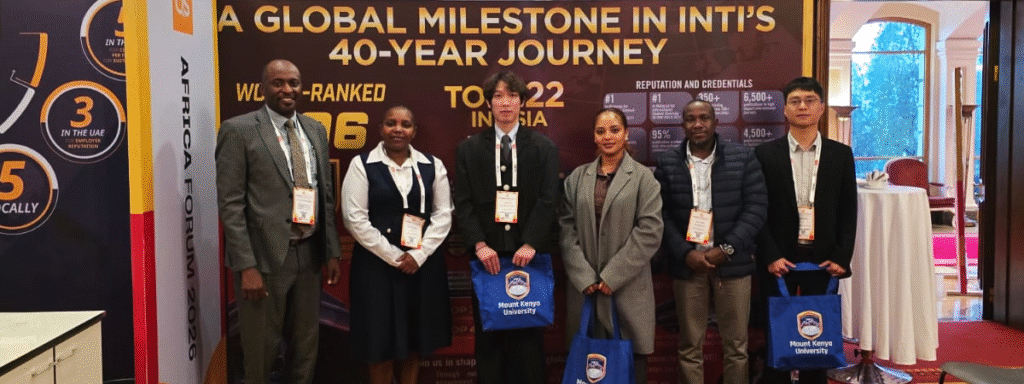
The summit also provided an important platform for networking, knowledge exchange, and the formation of new research collaborations. Through its active participation, Mount Kenya University reaffirmed its commitment to internationalization, research excellence, and strategic partnerships that contribute to sustainable development and position the University as a leading institution of higher learning in Africa and beyond.
As part of its continued commitment to academic excellence and global visibility, Mount Kenya University is preparing the necessary documentation for participation in the 2028 QS World University Rankings, whose results are expected to be released next year. The QS Africa Forum also provided an opportunity for the University to establish new strategic relationships with institutions that have extensive experience in global rankings. Among these was INTI International University, Malaysia, whose representatives expressed their willingness to mentor and support MKU as the University advances its journey towards QS ranking participation and international benchmarking.


