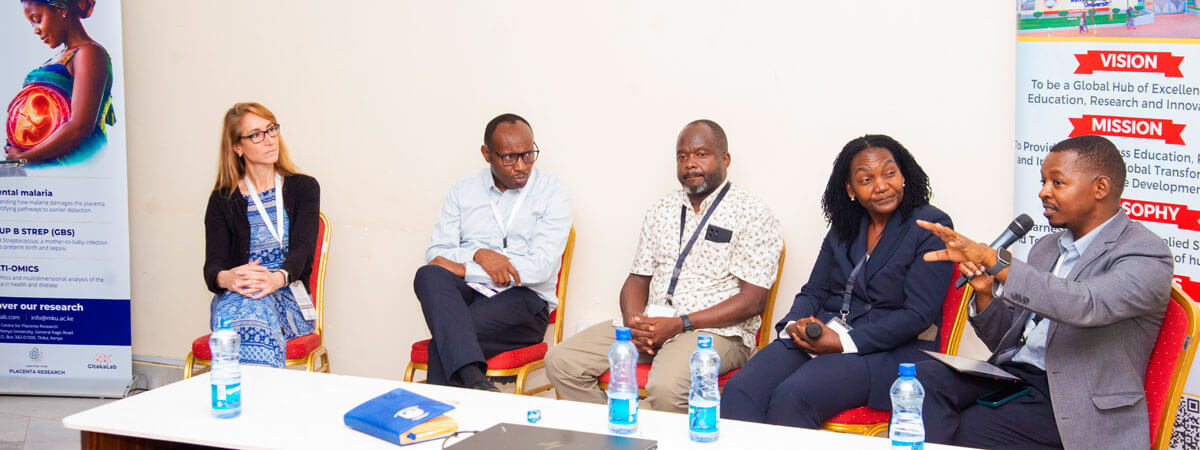
Leading researchers and health professionals from across the world met at Mount Kenya University (MKU) for a two-day symposium examining placental health, infections in pregnancy and ways to improve outcomes for mothers and babies.
The Placental Health Symposium 2026, held on November 5 and 6 at the Mwai Kibaki Convention Centre, was themed “Placental Health & Infections — From Mechanisms to Interventions”. Organised by MKU in partnership with the London School of Hygiene & Tropical Medicine (LSHTM), the Max Delbrück Center (MDC) in Germany and the University of Cambridge, it brought together specialists from more than a dozen institutions across Africa, Europe and Australia.
Among the keynote speakers was MKU physician-scientist Prof. Jesse Gitaka, whose work focuses on malaria, maternal health and newborn health. He directs the university’s Centre for Malaria Elimination and Centre for Research in Infectious Diseases at the Institute of Tropical Medicine, as well as its Directorate of Grants and Development.
Prof. Gitaka said the symposium set out to address critical challenges in maternal-infant health. “The different sessions over the two days are designed to bridge the gap between foundational laboratory science and real-world clinical practice, specifically targeting infectious diseases that disproportionately affect low-resource settings,” he said.
Opening the symposium on Thursday, he described the placenta as “the first organ any of us ever had”, yet one that is usually discarded without a second look. “Its health decides whether a baby is born alive, on time and at a healthy weight,” he said. “In Africa, the placenta is under siege. Malaria, HIV, cytomegalovirus, Group B Strep and anaemia all meet at this one interface.”
Prof. Gitaka has led a placental malaria research programme in Bungoma County since 2018, built on the generosity of women who agreed to donate their placentas to science. In 2025, he received a Wellcome Discovery Award to investigate the molecular pathways involved in placental malaria, and in July 2026 MKU established its Centre for Placenta Research. His team has linked the disease to changes in decidual macrophages, immune cells found in the lining of the uterus, and is studying antibody responses that may help protect pregnant women and inform future vaccine targets.
His work also includes developing rapid point-of-care tests for infections in pregnancy. He was part of the MKU–University of Hull team whose IFAST maternal-infection diagnostic won the Kenya Newton Prize in 2020. Earlier in his career, he worked as a clinical trials doctor on the RTS,S malaria vaccine trial at the KEMRI–Wellcome Trust Research Programme in Kilifi.
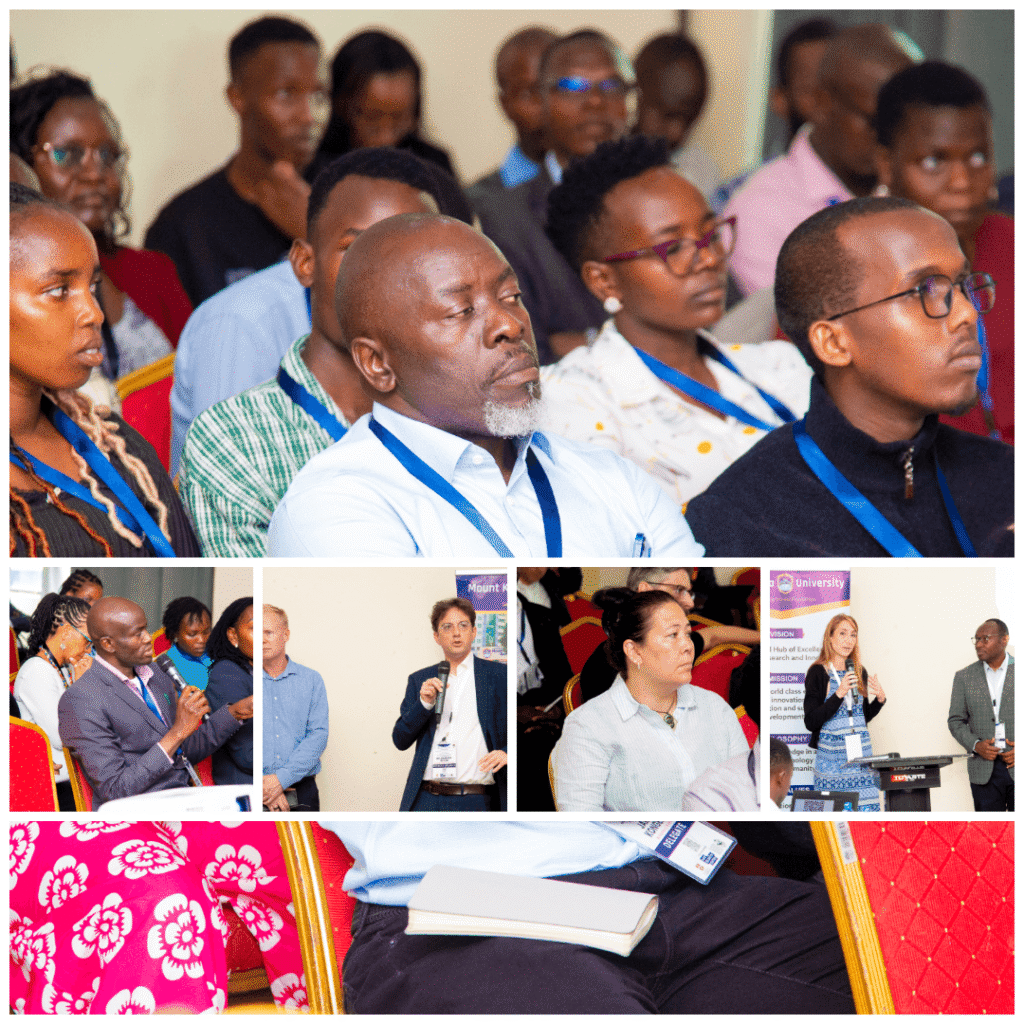
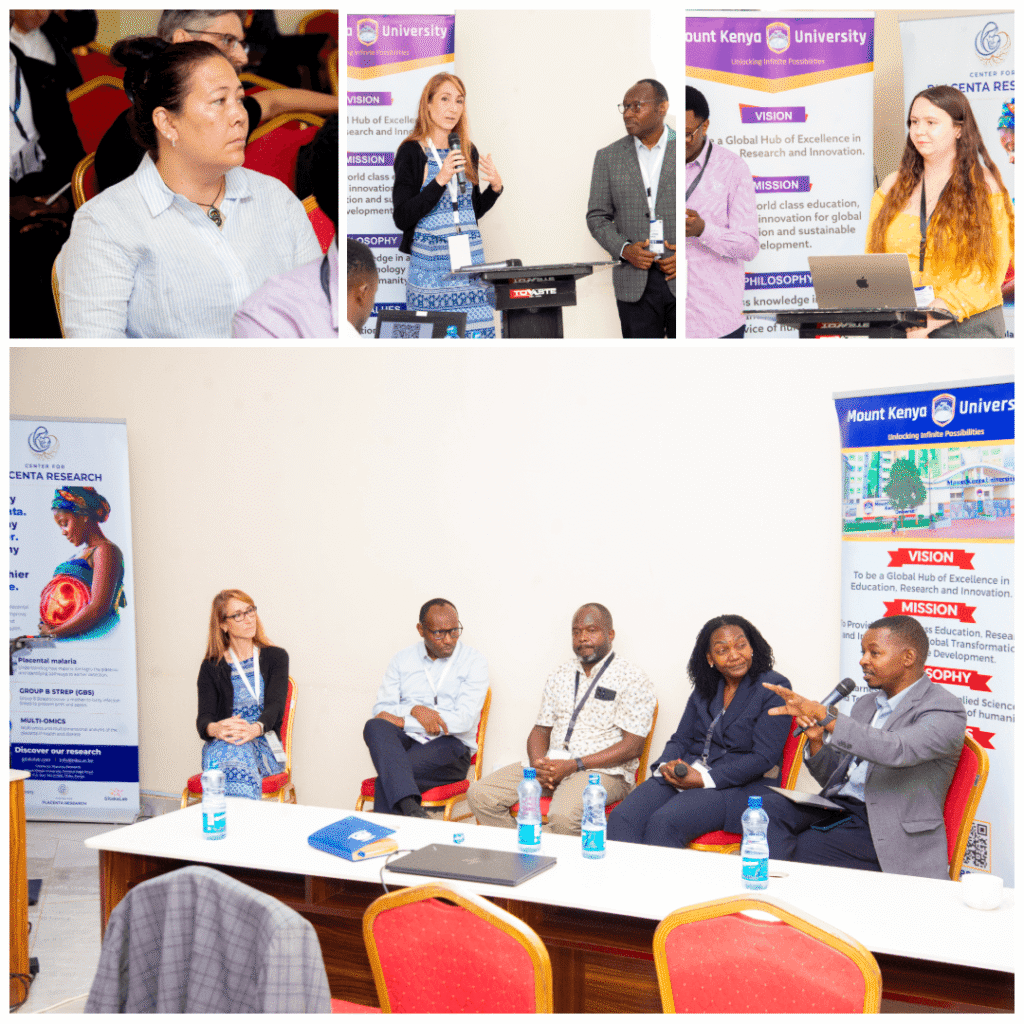
The symposium programme explored how infections affect the placenta and pregnancy, with sessions on malaria, HIV, Group B Streptococcus, maternal and infant immunity, diagnosis and genomics. Thursday’s sessions focused on mechanisms, with a panel that considered how research on placental infections can inform clinical practice. Friday turned to interventions, with a panel on research priorities for healthier pregnancies, before a closing “way forward” session aimed at shaping a shared research agenda for placental health in Africa.
Aside from Prof. Gitaka, other leading researchers who delivered keynote addresses included Prof. Amanda Sferruzzi-Perri (University of Cambridge, UK), Dr. Angela Koech (Aga Khan University, Kenya), Prof. Ricardo Ataide (Walter and Eliza Hall Institute, Australia), and Prof. Taane Clark and Dr. Nina Billows (both from the London School of Hygiene & Tropical Medicine, UK).
Other keynote speakers included Dr. Emanuel Wyler (Max Delbrück Center, Germany), Prof. Moses Obimbo (University of Nairobi), Dr. Doty Ojwach (Stellenbosch University, South Africa), and Prof. Bernard Kanoi and Dr. Francis Kobia (both from Mount Kenya University).
The symposium added to MKU’s credentials as a leader in healthcare training and research. The university’s medical school has in the past been named the best in East Africa, and last year the university announced plans to put up a cancer research and teaching facility in Thika as part of its 2020–2029 Strategic Plan.
The university has also initiated other partnerships with international institutions that offer health professionals trained at MKU opportunities in other countries.
Prof. Deogratius Jaganyi, Vice-Chancellor of MKU, said the university would continue to invest heavily in training healthcare professionals, adding that the advancement of a country is closely linked to securing the health of its people.
“The bottom line is that we need to train more doctors, nurses, clinicians and other healthcare professionals. This is where MKU and other institutions of higher learning come in,” he said.
The institution is currently in partnership with Hochschule Koblenz – University of Applied Sciences in Germany, in a project that trains Kenyan students and offers them placements in Germany’s healthcare sector. The initiative has so far seen more than 100 healthcare professionals secure paid apprenticeships in different healthcare facilities in Germany.


