MOMBASA, KENYA | 12 NOVEMBER 2026
Mount Kenya University (MKU) is championing a transformative approach to higher education that places innovation, entrepreneurship, industry collaboration and practical problem-solving at the centre of sustainable development in Africa.
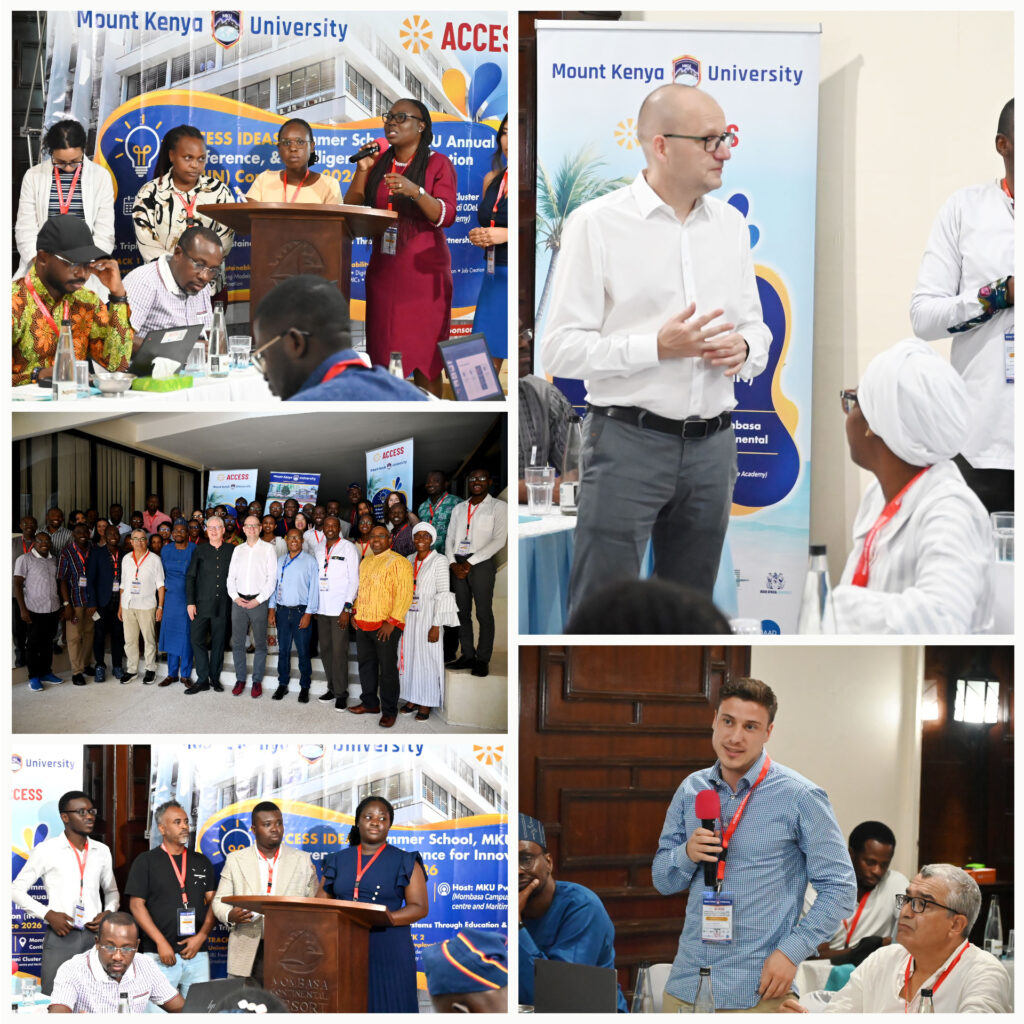
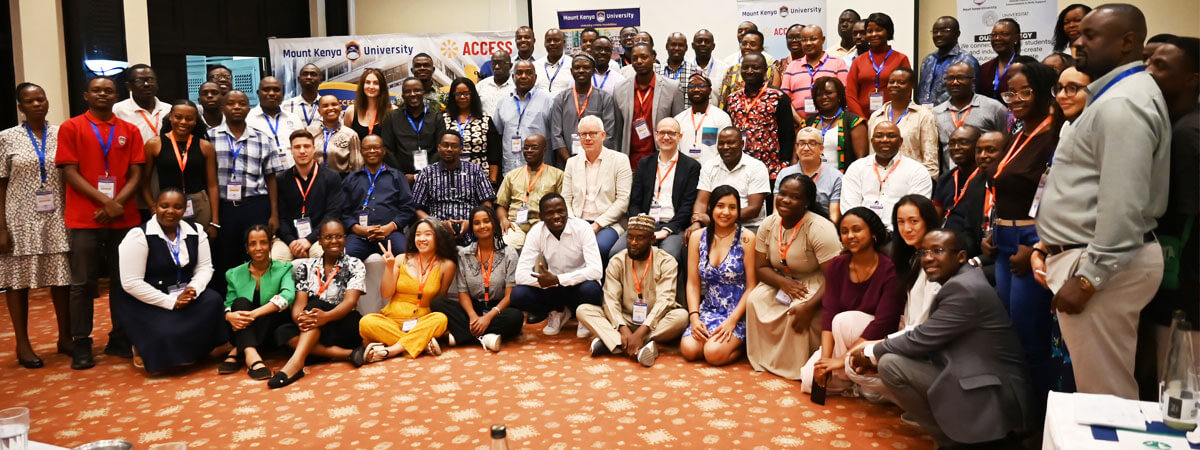
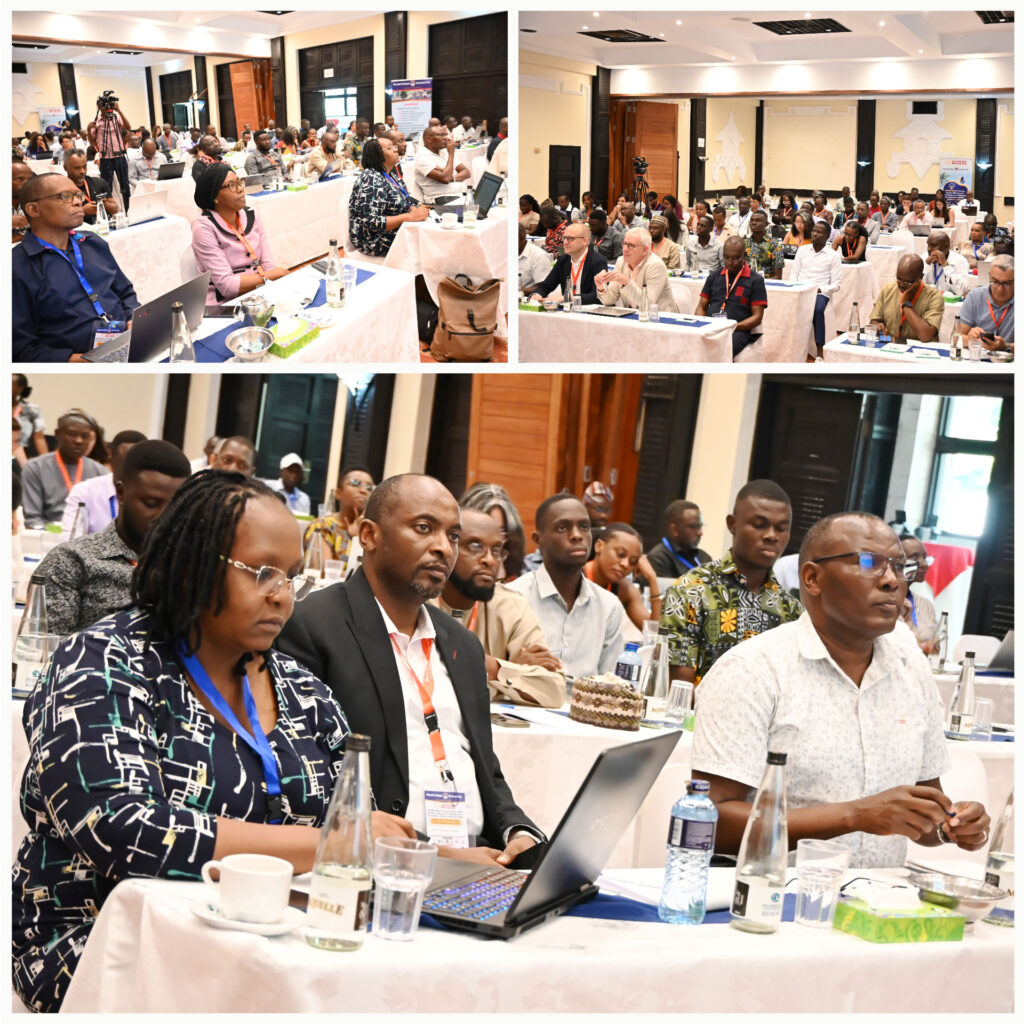
The call was made during the 2026 Annual University Conference and Intelligence for Innovation (iN4iN) Conference, taking place at Mombasa Continental Resort from 12th to 13th November 2026. The international conference brings together academics, researchers, policymakers, industry leaders, entrepreneurs and students from Africa and Europe under the theme “The Triple Synergy: Building Sustainable Innovative Ecosystems Through Education and Partnerships.”
The conference focuses on advancing Sustainable Development Goal 9 (SDG 9) on Industry, Innovation and Infrastructure, while exploring how universities, industry and government can collaborate to build sustainable innovation ecosystems.
Universities Must Demonstrate the Impact of Innovation
In remarks delivered on his behalf by Prof. Peter G. Kirira, Deputy Vice-Chancellor, Academic and Student Affairs, MKU Vice-Chancellor Prof. JAGANYI challenged universities to measure their success through the tangible impact of their innovation and entrepreneurship initiatives.
“The real measure of our success is not the number of conferences we hold, the number of boot camps we organise or the number of participants who attend our programmes. The real measure of success is the difference we make in people’s lives,” he observed.
He emphasised the need for universities to track businesses established, jobs created, young entrepreneurs empowered and communities benefiting from university-led innovations.
The Vice-Chancellor reaffirmed MKU’s commitment to entrepreneurial education, highlighting the Graduate Enterprise Academy, established in 2013 to nurture young entrepreneurs through mentorship, business development support and networking opportunities.
He also underscored the importance of institutional collaboration, noting that universities must build strategic partnerships across countries, disciplines and industries to address complex societal challenges.
Pro-Chancellor Calls for Universities to Become Innovation Hubs
Officially opening the conference, MKU Pro-Chancellor Dr. Vincent Gaitho challenged universities to move beyond traditional teaching and knowledge dissemination to become centres of innovation, entrepreneurship and practical solutions to societal challenges.
He observed that artificial intelligence, digitalisation, climate change and emerging technologies require universities to rethink their approaches to education, research and innovation.
“Education must equip graduates not only with qualifications but also with critical thinking, creativity, digital competencies, problem-solving abilities and an entrepreneurial mindset. Our graduates should be prepared not merely to seek employment but to undertake research of the hiring company and propose practical innovative solutions that address challenges unique to the company,” he noted.
Dr. Gaitho highlighted MKU’s investment in emerging technologies, including its humanoid robot, which provides students with practical exposure to robotics, artificial intelligence and programming.
He also acknowledged the support of the German Academic Exchange Service (DAAD), the German Federal Ministry for Economic Cooperation and Development (BMZ) and Leipzig University in strengthening African universities through mentorship, institutional collaboration and capacity building.
He reaffirmed MKU’s commitment to its role as the United Nations Academic Impact (UNAI) SDG 9 Hub Chair for Industry, Innovation and Infrastructure for 2025–2027.
University Living Labs: Connecting Research to Industry
A major highlight was the keynote presentation by Prof. Dr. Utz Dornberger, Director of the SEPT Competence Center at Leipzig University, Germany, and Project Director of ACCESS, titled “Unlocking Business Potential Through University Living Labs.”
Prof. Dornberger introduced University Living Labs as user-centred innovation ecosystems that bring universities, businesses, government and civil society together to identify challenges, develop solutions and test innovations in real-life settings.
He outlined seven key dimensions for successful University Living Labs: a clear value proposition, academic coaching, viable institutional and business models, strategic industry partnerships, real-life experimentation, curriculum and research integration, and responsible co-creation.
Drawing from Leipzig University’s experience, he highlighted applications in artificial intelligence, smart farming, business process optimisation, logistics and digital education.
He also presented Process Living Lab Africa, a proposed initiative to help African startups optimise operations, improve decision-making and strengthen their capacity to scale.
The model provides an opportunity for universities to connect academic research with practical business needs while creating experiential learning opportunities for students.
ACCESS IDEAS Summer School: Turning Ideas into Practical Solutions
The conference builds on the outcomes of the African Centre for Career Enhancement and Skills Support (ACCESS) IDEAS International Summer School 2026, hosted by MKU in Mombasa from 5th to 11th November 2026.
Held under the theme “Co-Creating Sustainable Solutions: Scaling MSMEs through SDG 9,” the programme brought together students, academics and industry experts from eight universities to explore entrepreneurship, innovation, graduate employability and sustainable enterprise development.
Through mentorship, industry-led sessions, collaborative projects and pitching exercises, international student teams identified real-world challenges and developed innovative ideas aimed at supporting Micro, Small and Medium Enterprises (MSMEs).
Bismark Yeboah, ACCESS Coordinator at Leipzig University, expressed excitement about the projects developed through the cross-country collaboration, noting that students benefited from exchanging perspectives and learning from experienced industry practitioners and entrepreneurs.
Among the industry engagements, Stella Muhoro of Brands & Beyond Kenya challenged students to start with the problem rather than the prototype, emphasising the importance of validating ideas against genuine market needs. German entrepreneur Kai Hempel shared lessons on building resilient businesses through strong systems, reliable processes and effective teams.
Prof. Kirira observed that the engagements were designed to help students appreciate the practical dimensions of innovation.
“Through these engagements, we wanted students to appreciate that innovation is not simply about having a brilliant idea or developing technology; it is about understanding problems, working collaboratively and creating solutions that can be sustained and scaled,” he said.
The programme also featured a Marshmallow Challenge facilitated by Leonie Theus of Leipzig University, which demonstrated the importance of teamwork, creativity, communication and testing ideas.
An engagement with I Choose Life–Africa (ICL), an organisation collaborating with MKU through ACCESS, further connected students with real-life experiences and challenges faced by MSMEs, demonstrating how university-industry-community partnerships can bridge classroom learning and business realities.
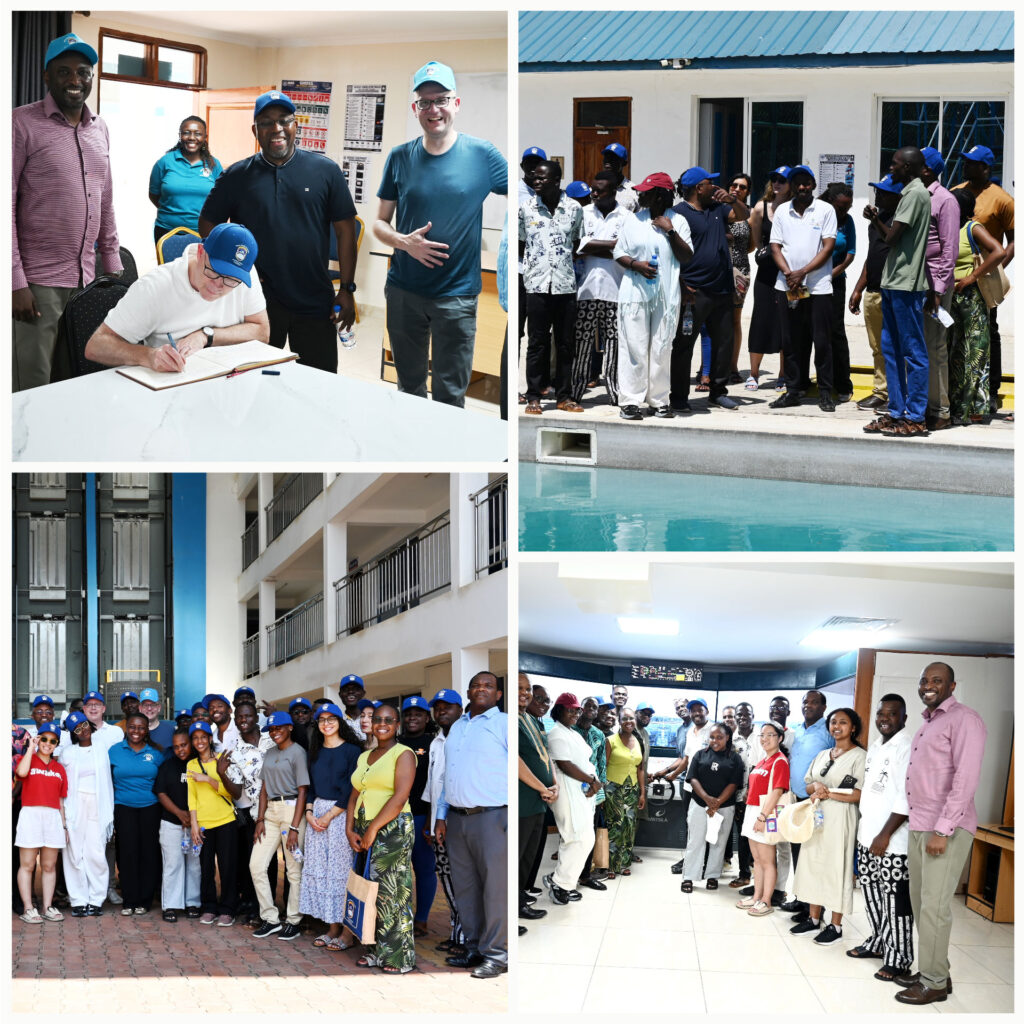
Participants also undertook cultural and industry visits to Fort Jesus, Mama Ngina Waterfront, Gede Ruins, the Vasco da Gama Pillar and MKU’s Maritime Academy in Malindi, gaining exposure to the region’s heritage and blue economy potential.
Advancing Artificial Intelligence, Research and Graduate Employability
The iN4iN Conference provides a platform for extending the Summer School’s practical learning into broader academic, policy and industry conversations.
A key highlight was a live panel discussion broadcast on TV47 and Radio 47 under the topic “SDG 9 Synergy for Growth: Triple Helix in Driving MSME Innovation in Kenya.” The discussion explored how collaboration between academia, industry and the ACCESS programme can unlock the potential of MSMEs.
The conference features two major research tracks: University–MSME Partnerships for Sustainable Livelihoods, focusing on enterprise development and sustainable livelihoods, and Artificial Intelligence and Employability in Higher Education, examining how emerging technologies can transform education, productivity and graduate employability.
The second day will feature keynote presentations on employability research in Africa, inclusive innovation, the entrepreneurial university model and the relationship between artificial intelligence, MSMEs and employment opportunities.
Strengthening Africa’s Innovation Ecosystem
Through its leadership as the UNAI SDG 9 Hub Chair and participation in international partnerships such as ACCESS, MKU continues to champion stronger collaboration between universities, industry and government.
ACCESS brings together eight universities and a partner NGO from Africa and Germany, with Leipzig University serving as a key knowledge partner. The programme is supported by DAAD and BMZ.
Through the ACCESS IDEAS Summer School and iN4iN Conference, MKU is strengthening the connection between academic knowledge and practical application, positioning universities as key drivers of innovation, entrepreneurship, graduate employability and sustainable economic transformation.
The engagements are expected to strengthen institutional networks, inspire new collaborations and generate practical solutions that contribute to building sustainable and innovative ecosystems across Africa.